Pregnancy Heartburn Protocol
Heartburn is one of the most common forms of discomfort during pregnancy. While it is a frequent companion to the second and third trimesters, you don't have to just "tough it out." At Atlanta Birth Collective, we focus on actionable steps to help you find ease. Here is a comprehensive list of what to do when the burn begins.

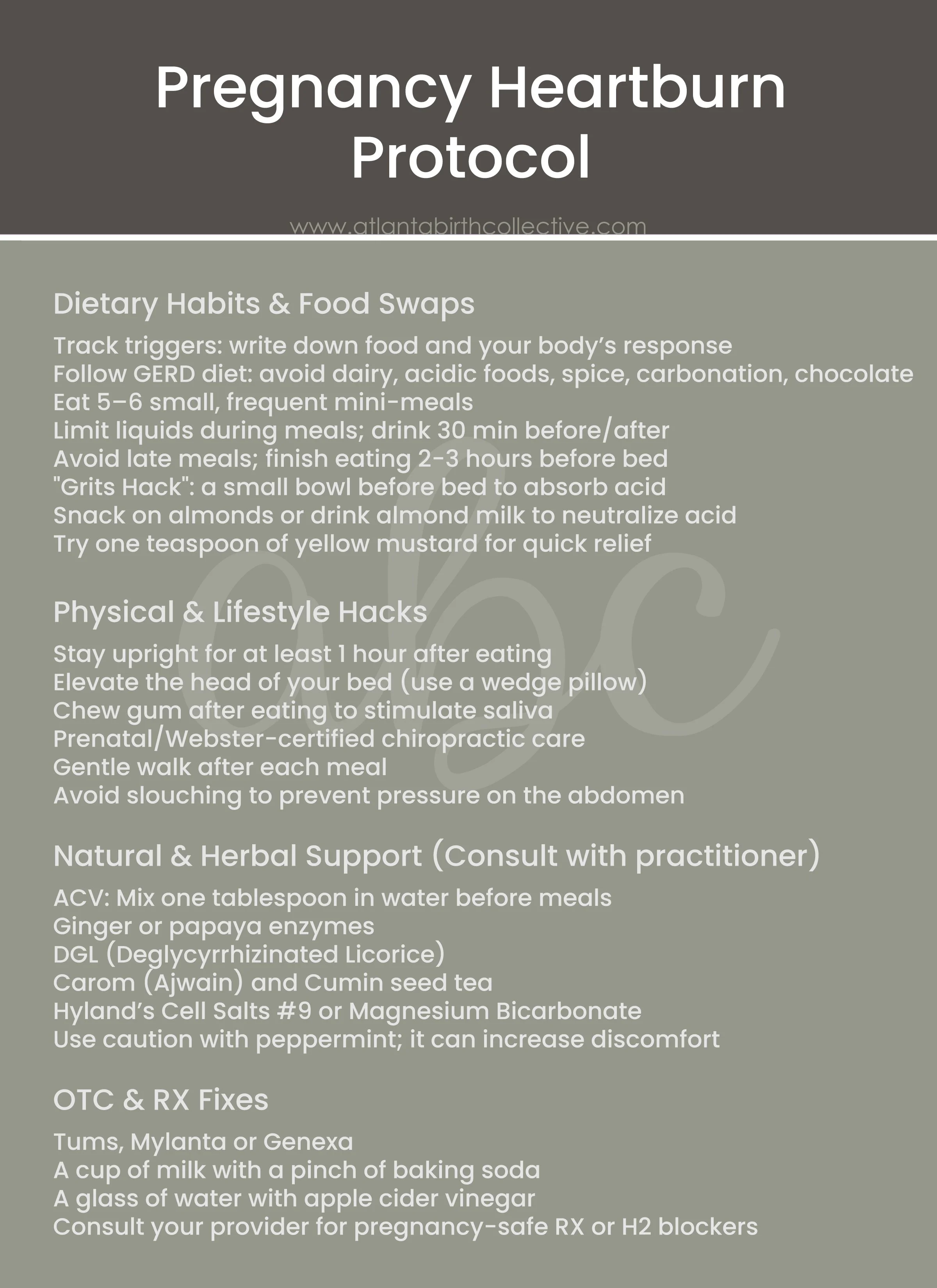
The ABC Diet Protocol for Heartburn
Managing your diet is often the first step toward relief. Because triggers vary from person to person, a good place to start is by tracking what you eat and how you feel after meals. This can help you notice whether foods like dairy, acidic foods such as citrus or tomatoes, or certain breads seem to worsen your symptoms. Bland, simple foods like grits, toast, rice, bananas, applesauce, broth, or baked potatoes are often easier on the stomach than greasy, spicy, or acidic foods. Milk or yogurt may soothe symptoms for some people, while dairy makes things worse for others, so it really depends on the person.
Small and Frequent: Switch to eating smaller meals throughout the day rather than three large ones to avoid overfilling the stomach.
Clean up the most common food triggers first: Start with the usual culprits: fried foods, fatty foods, spicy foods, chocolate, caffeine, citrus, tomato-heavy foods, fizzy drinks, onions, and mint if those seem to bother you.
Separate Solids and Liquids: Try not drinking while eating. Save your water or tea for 30 minutes before or after a meal to reduce stomach volume.
The "Grits" Hack: Eating a small bowl of gluten-free grits before bedtime can help absorb excess acid while you sleep.
Alkaline Support: Snacking on almonds or sipping almond milk can naturally neutralize acid due to their alkaline nature.
Mustard: A teaspoon of yellow mustard is a quick, traditional remedy that many find provides immediate relief.
Timing: Aim to finish your last meal or snack at least 2–3 hours before lying down. Do not eat close to bedtime.

Physical and Lifestyle Strategies
Sometimes, managing the discomfort is as simple as using gravity to your advantage.
Post-Meal Positioning: Stay upright for at least an hour after eating. Avoid slouching, which puts extra pressure on your abdomen.
Elevate Your Sleep: Use a wedge pillow or safely elevate the head of your bed by about 6 inches. This keeps acid in the stomach where it belongs.
Chewing Gum: Chewing gum after eating stimulates saliva production, which acts as a natural buffer against acid.
Chiropractic Care: Many clients find that regular chiropractic adjustments help alleviate the physical pressure of pregnancy that contributes to reflux.
Gentle Exercise: A gentle walk after meals could help.

Natural and Herbal Remedies
For those looking for holistic support, these natural options are highly effective for soothing the digestive tract. Check with your practitioner before adding anything new to your body.
ACV in Water: Mixing a tablespoon of Apple Cider Vinegar (ACV) in water before a meal can help signal the stomach to stay closed.
Ginger and Papaya Enzymes: Ginger (chews or tea) and papaya enzymes are excellent for aiding digestion and reducing that heavy, bloated feeling.
DGL: Deglycyrrhizinated Licorice (DGL) is a safe herbal option that helps coat and protect the lining of the esophagus.
Traditional Seeds: Steeping Carom and Cumin seeds in hot water creates a gentle tea that can settle the stomach.
Cell Salts: Hyland’s cell salts #9 is a common homeopathic choice for balancing acidity.
Magnesium Bicarbonate: This supplement helps neutralize acid while providing the added benefit of magnesium for muscle relaxation.
A Note on Peppermint: While peppermint tea is often used for digestion, it can actually relax the valve between the stomach and esophagus, potentially increasing discomfort. Use it with caution to see how your body reacts.

Over-the-Counter and Prescription Options
If natural and physical adjustments aren't providing enough relief, there are several safe medical steps to take. Always consult with your provider before starting a new regimen. Do not take antacids close to your iron or folic acid. NHS advises separating antacids from iron and folic acid by 2 hours because antacids can reduce absorption. That matters in pregnancy.
Quick Relief: Tums (calcium carbonate) and/or Mylanta are the standard for fast neutralization.
Clean Options: Genexa antacid offers a version of calcium carbonate with cleaner, organic ingredients.
The Baking Soda Buffer: A cup of milk with a pinch of baking soda is an old-school way to quickly neutralize acid, though it should be used sparingly.
Medication: If symptoms persist, talk to your doctor or midwife about OTC or RX interventions like H2 blockers or PPIs to manage chronic GERD symptoms safely during pregnancy.
Managing pregnancy heartburn is a journey of trial and error as your body changes to accommodate your growing baby. While this discomfort is a common part of the prenatal experience, you don’t have to navigate it alone. At Atlanta Birth Collective (ABC), we specialize in providing comprehensive doula support and holistic resources for families across North Atlanta, including Canton, Roswell, Alpharetta and Woodstock. Whether you are seeking natural reflux remedies, nutritional guidance, or expert birth support, our team is dedicated to ensuring your pregnancy is as comfortable and empowered as possible. Contact us today to learn more about how our doula services can support your unique journey through pregnancy and postpartum.