Supporting Your Body Through an IUGR Diagnosis
Disclaimer:The information provided by Atlanta Birth Collective is for educational purposes only and does not constitute medical advice. Intrauterine Growth Restriction (IUGR) is a medical condition that requires close monitoring by your obstetrician or maternal-fetal medicine specialist. We cannot make any promises that dietary or lifestyle changes will increase fetal weight. Always consult your provider before changing your diet, adding supplements, or altering your daily routine.
Hearing that your baby is measuring small and receiving a diagnosis of Intrauterine Growth Restriction (IUGR), sometimes called Fetal Growth Restriction (FGR), can be incredibly overwhelming. It is natural to immediately ask, "What did I do wrong?" and "What can I eat to fix this?"
While you might be frantically searching for how to increase fetal weight, the most important thing to do right now is take a deep breath. You did not cause this.
In the vast majority of cases, IUGR is caused by placental insufficiency. The placenta or umbilical cord simply isn't delivering nutrients and oxygen at maximum efficiency. Because of this, there is no magic food or perfect IUGR diet plan that will "cure" it.
However, while you cannot control how your placenta functions, you can optimize the quality of the nutrients that are getting through. By focusing on nutrient density, hydration, and blood flow, you can support your baby's development and protect your own maternal nutrient stores.

Best Foods for an IUGR Diagnosis: Protein & Blood Flow
When placental flow is restricted, you want to make sure every drop of blood delivered to your baby is packed with high-quality building blocks.
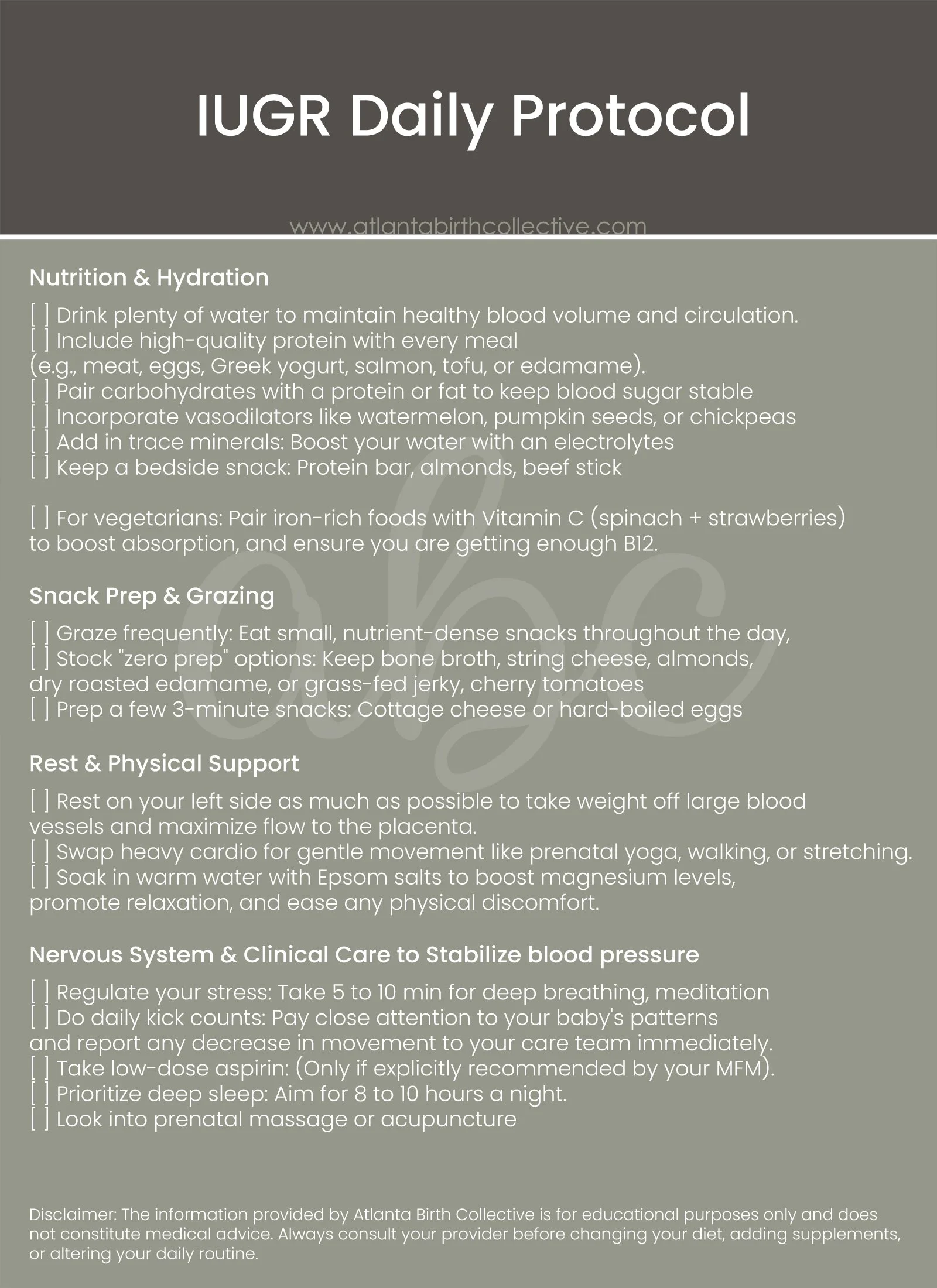
Protein is essential for fetal tissue and muscle development. Focus on easily digestible, high-quality proteins like eggs, lean poultry, Greek yogurt, and well-cooked salmon (which also provides crucial Omega-3 fatty acids for brain development).
Prioritize hydration to maintain a healthy blood volume, which is critical for circulation.
Rest on your left side when possible. This position takes the weight of the uterus off the large blood vessels in your abdomen, maximizing blood flow to your uterus and placenta.
Focus on Vasodilators (L-Arginine): L-Arginine is an amino acid that produces nitric oxide in the body, which acts as a vasodilator (it relaxes and opens up blood vessels). Opening blood vessels maximizes flow to the placenta. Great food sources include watermelon, pumpkin seeds, spirulina, and chickpeas.
Vegetarian Diet Tips for an IUGR Pregnancy
If you follow a plant-based diet, you need to ensure your plant sources are working as hard as possible for you and your baby.
Protein: Rely on edamame, tofu, tempeh, lentils, quinoa, chia seeds, and hemp hearts for a complete amino acid profile.
Iron absorption: Plant-based iron is hard to absorb. Always pair iron-rich foods (spinach, lentils) with Vitamin C (bell peppers, citrus) to unlock the nutrients.
Don't skip the B12: Ensure you are drinking fortified plant milks, eating nutritional yeast, or taking a high-quality B12 supplement approved by your provider.

High-Protein Snacks to Support Fetal Growth
When dealing with IUGR, many moms find that their stomach space feels limited. Eating three large meals can feel impossible. The best strategy is to keep a rotation of small, protein-dense snacks that you can graze on throughout the day.
A quick rule of thumb: Always pair your carbohydrates with a protein or fat. This keeps your blood sugar stable, which reduces unnecessary stress on your body and your placenta.
Here is a list of quick, nutrient-heavy snacks to support your blood volume and your baby's growth, broken down by how much prep they require.
Quick IUGR Pregnancy Snacks (Zero Prep)
When you are exhausted and just need fuel instantly, keep these on hand:
High-quality bone broth: Packed with easily digestible amino acids (like glycine and proline), bone broth supports your blood volume and hydration while requiring zero prep. It is incredibly comforting when your stomach feels too squished for a full meal.
String cheese and almonds: A single mozzarella stick has about 7g of protein, and a handful of almonds adds another 6g, plus healthy fats.
Greek yogurt cups: Traditional Greek yogurt packs 15-20g of protein per serving. Look for options with low added sugar.
Dry roasted edamame: Keep a bag in your purse or car. Just 1/3 cup delivers around 14g of plant-based protein.
High-quality jerky or meat sticks: Look for grass-fed beef or turkey sticks. They offer 9-10g of protein with zero prep.
Pumpkin seeds (Pepitas): A quarter cup provides nearly 10g of protein, plus a massive dose of zinc and iron.
The "Under 3 Minutes" Prep List
These take just a moment to throw together but offer a significant nutrient payout:
Cottage cheese with cherry tomatoes: A half-cup of cottage cheese is a protein powerhouse (12-14g). Top it with halved cherry tomatoes and olive oil. The Vitamin C in the tomatoes also helps your body utilize nutrients.
Apple slices with thick nut butter: Core an apple and pair it with 2 tablespoons of almond or peanut butter (7-8g protein).
Hard-boiled eggs with "Everything Bagel" seasoning: Two large eggs provide 12g of highly bioavailable protein and choline, which is vital for fetal brain development.
Avocado and hemp heart toast: Mash half an avocado on whole-grain sourdough and sprinkle generously with hemp hearts. Three tablespoons of hemp hearts add 10g of complete plant protein.
Vegetarian Powerhouse Snacks
These snacks are specifically designed to maximize protein and iron absorption without meat:
The Iron-Boosting Smoothie: Blend 1 cup of soy milk (8g protein), a scoop of plant-based protein powder (15-20g), a large handful of fresh spinach (iron), and a cup of frozen strawberries (Vitamin C). The strawberries unlock the plant-based iron in the spinach so your body can actually absorb it.
Roasted spiced chickpeas: Toss a can of rinsed chickpeas with olive oil, smoked paprika, and salt, and roast at 400°F until crunchy. A half-cup delivers about 7g of protein and a solid dose of folate.
Chia seed pudding: Mix 3 tablespoons of chia seeds with 1 cup of fortified soy or almond milk and let it sit in the fridge overnight. You will get 12g of protein, excellent hydration, and essential Omega-3 fatty acids.

Did you know that we offer a discount for maternity photo shoots?
Managing Your IUGR Pregnancy and Mental Health
While nutrition is a wonderful tool, managing the clinical and emotional sides of IUGR is just as important.
Ask about Low-Dose Aspirin: While we do not prescribe medication, Maternal-Fetal Medicine (MFM) doctors frequently recommend daily low-dose (baby) aspirin for IUGR to help improve placental blood flow. Ask your doctor if this therapy is appropriate for your specific case.
Strict Kick Counting: Babies with restricted growth conserve energy, so a change in movement is often the very first sign that the placenta is struggling. Do your daily kick counts and never wait to report decreased movement to your provider.
Scale back heavy physical exertion: While gentle movement is great, intense workouts pull calories and blood flow toward your skeletal muscles. Swapping heavy cardio for prenatal yoga, stretching, or walking keeps that vital blood flow directed toward your uterus and placenta.
Take magnesium-rich Epsom salt baths: Magnesium naturally supports vasodilation (relaxing the blood vessels) and can help lower stress and improve sleep, which are all vital for placental health.
Finally, manage your stress. High stress levels impact your blood pressure, which affects placental blood flow. Lean on your doula, your partner, and your care team. Try to find small moments of peace in your day. Your body is working incredibly hard, and you are doing a beautiful job supporting your baby.
If you are navigating an IUGR diagnosis and feeling overwhelmed, you do not have to do it alone. Our doulas at Atlanta Birth Collective support families through complex pregnancies and births across Woodstock, Canton, Roswell, and the broader North Atlanta area. Reach out today to learn how we can support your care team.