How to Strengthen Your Amniotic Sac and Prevent Premature Rupture of Membranes (PROM)
Disclaimer:The information provided by Atlanta Birth Collective is for educational purposes only and does not constitute medical advice. Every pregnancy is unique, and we cannot make any promises or guarantees regarding how or when your water will break. Always check with your doctor or midwife before starting any new supplements or making significant changes to your diet.
At Atlanta Birth Collective, one of the most common fears we hear from expectant parents is: "What if my water breaks while I'm at the grocery store?"
Movies make it seem like every labor starts with a massive, unexpected gush of fluid in a public place. In reality, only about 10-15% of labors start with the water breaking before contractions begin. However, when the amniotic sac ruptures prematurely (known as Premature Rupture of Membranes, or PROM), it puts you on a ticking clock with most care providers and increases the risk of infection.
The good news? The strength of your amniotic sac isn't entirely up to chance. Evidence suggests you can actively support its strength through nutrition.
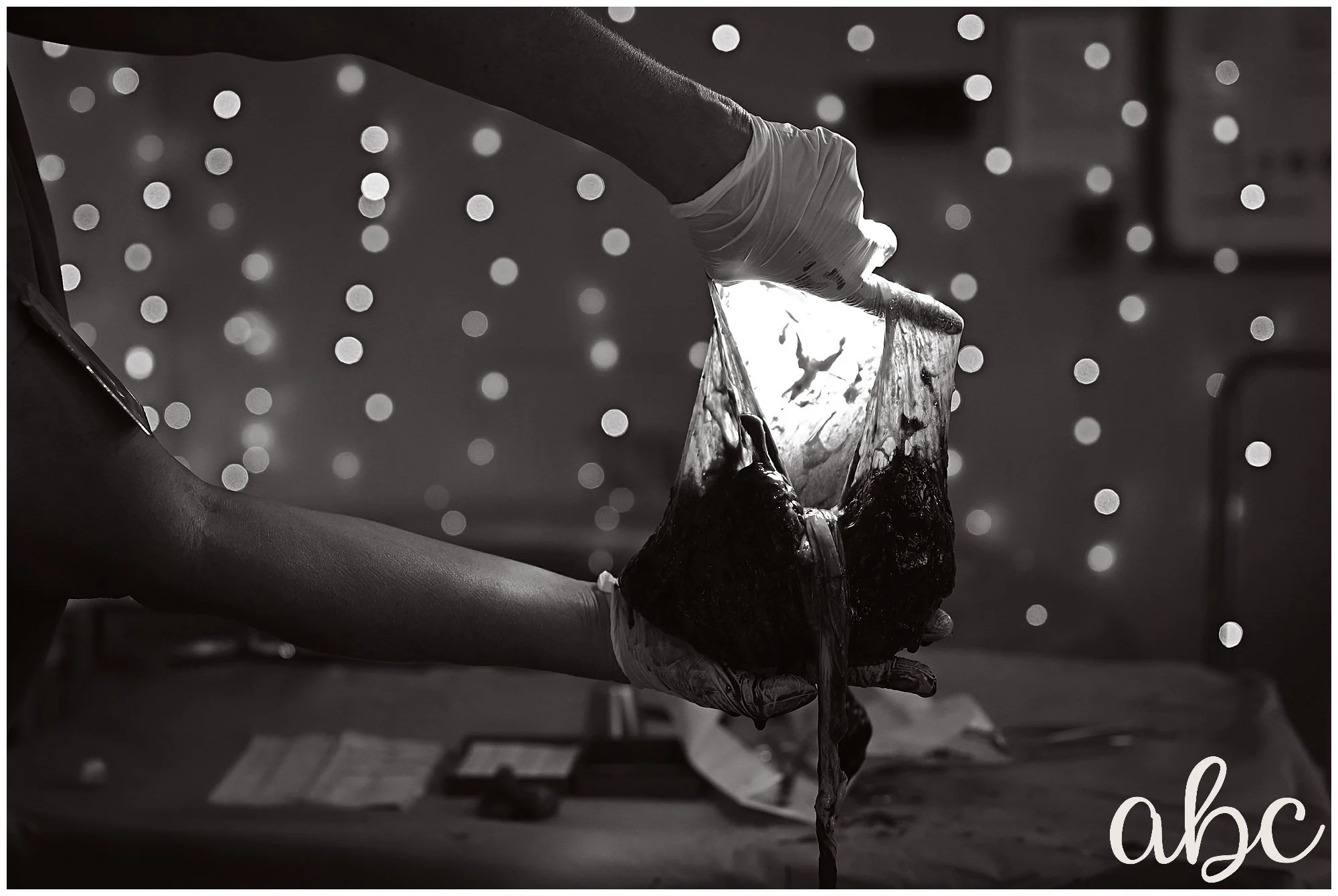
Image of the bag of membranes. This is the “bag of waters” that can break/release. Although it looks like only one layer, there are two layers.
The Anatomy of the Amniotic Sac
Your baby is protected by a remarkable two-layered sac (the amnion and the chorion). This sac is responsible for holding up to 1.5 liters of amniotic fluid by the end of your pregnancy.
So, what is that sac actually made of? Collagen.
Collagen is the structural protein that gives the membrane its elasticity and strength. Studies show that when the amniotic sac breaks prematurely, the tissues often have significantly lower collagen levels. To help keep that water bag intact until you are in active labor, your body needs the right building blocks to synthesize collagen continuously.
Vitamin C: A Great Nutrient for a Strong Amniotic Sac
Your body cannot produce collagen without Vitamin C. It acts as both the primary building block for the amniotic sac and as an antioxidant that helps protect the tissue from breaking down.
Recent clinical reviews have found that women who experience premature rupture of membranes often have significantly lower Vitamin C levels in their blood than those whose water stays intact. While no supplement can guarantee your water won't break early, ensuring adequate Vitamin C intake is a highly recommended way to support membrane integrity.

You can see CNM Carson Ragan of OB2ME pulling up the membranes. The “bag”.
Naturally Gluten-Free Whole Food Sources of Vitamin C
How to get it: Because your body absorbs nutrients best from whole foods, focus on a diet rich in fresh produce. Great sources include:
Red and yellow bell peppers
Citrus fruits (oranges, grapefruits, lemons)
Strawberries and kiwi
Broccoli and Brussels sprouts
Tip: Vitamin C is water-soluble, meaning your body flushes out what it doesn't use every day. You need to consume it daily, not just once a week!
Essential Minerals and Amino Acids to Prevent PROM
Vitamin C does not work alone. To build strong collagen, your body also requires:
Amino Acids (Protein): Proline and glycine are the specific amino acids needed for collagen. You can find these in bone broth, slow-cooked meats, eggs, and beans.
Copper & Zinc: These trace minerals are essential cofactors for collagen production. You can get them from nuts, seeds (like pumpkin seeds), lentils, and shellfish.
Omega-3 Fatty Acids: Inflammation is a major enemy of collagen. High levels of systemic inflammation can degrade the amniotic sac prematurely. Adding Omega-3s (via fish oil, chia seeds, walnuts, or well-cooked salmon) helps keep inflammation low and tissues resilient.What Weakens the Amniotic Sac?

The “tree of life” placenta photograph we often capture at Atlanta Birth Collective.
Nutrition helps build the bag up, but certain factors can compromise it. Two of the biggest risks to your amniotic sac's integrity are:
Infection: Ascending bacteria (even low-grade, asymptomatic bacterial vaginosis) can rapidly weaken the collagen in the membranes.
Mechanical Disruption (Cervical Checks): Routine cervical checks at the end of pregnancy introduce foreign bacteria into the vaginal canal and can inadvertently strip or irritate the membranes. Discussing the necessity of vaginal exams with your provider before you are in active labor is one of the most effective ways to protect your water bag.
Dehydration: The fluid inside the sac provides a vital cushion. Dehydration leads to lower amniotic fluid volume, meaning your baby’s movements put more direct mechanical friction and stress on the sac itself. Aim to drink half your body weight in ounces of water daily, plus electrolytes.
Prostaglandins (In Specific Situations): If you are experiencing preterm contractions, spotting, or have a history of PROM, your provider may recommend "pelvic rest" (avoiding intercourse). This is because prostaglandins in semen can soften the cervix and potentially irritate the membranes.

Preparing for Birth with an Atlanta Doula: Next Steps
While you cannot control every aspect of birth, eating a diet rich in Vitamin C, staying hydrated, and having open conversations with your provider about late-pregnancy cervical exams can give your body excellent support as you approach your due date. Because every pregnancy is unique, our doula team does not apply blanket recommendations, like “laboring at home as long as possible”, to every client. Instead, we curate a detailed birth plan based on each mom to ensure you feel supported through every step of your labor.