Early Breastfeeding Success: Colostrum
Colostrum Collection and Establishing Your Supply
A Note From Maegan: When we check in with our clients in the days immediately following birth, we often hear the same panicked words: "Nothing is coming out of my breast. My baby isn't getting enough. We have decided to supplement." If you are feeling this way, we want to offer some immediate reassurance. In those very early days, breastfeeding is entirely about stimulation. Your primary goal is simply to latch your baby every 2-3 hrs, at a minimum.
It is completely normal if you cannot see anything coming out, and it absolutely does not mean that your baby immediately requires formula.
To be clear, we aren't anti-formula, we are anti-anxiety. Our goal is to give you the information you need to trust your body, so you can understand exactly what is happening as your milk supply establishes.
To help ease that early postpartum anxiety, I asked for some insight from Debbie Cornett, RN, IBCLC, and Shea Collier, RN, IBCLC. They are quite literally the nicest women I know, and the very same experts who gently guided my own daughter through her early days of breastfeeding. I asked them to lay out the facts about how your milk supply actually works, so you can feel confident instead of concerned.
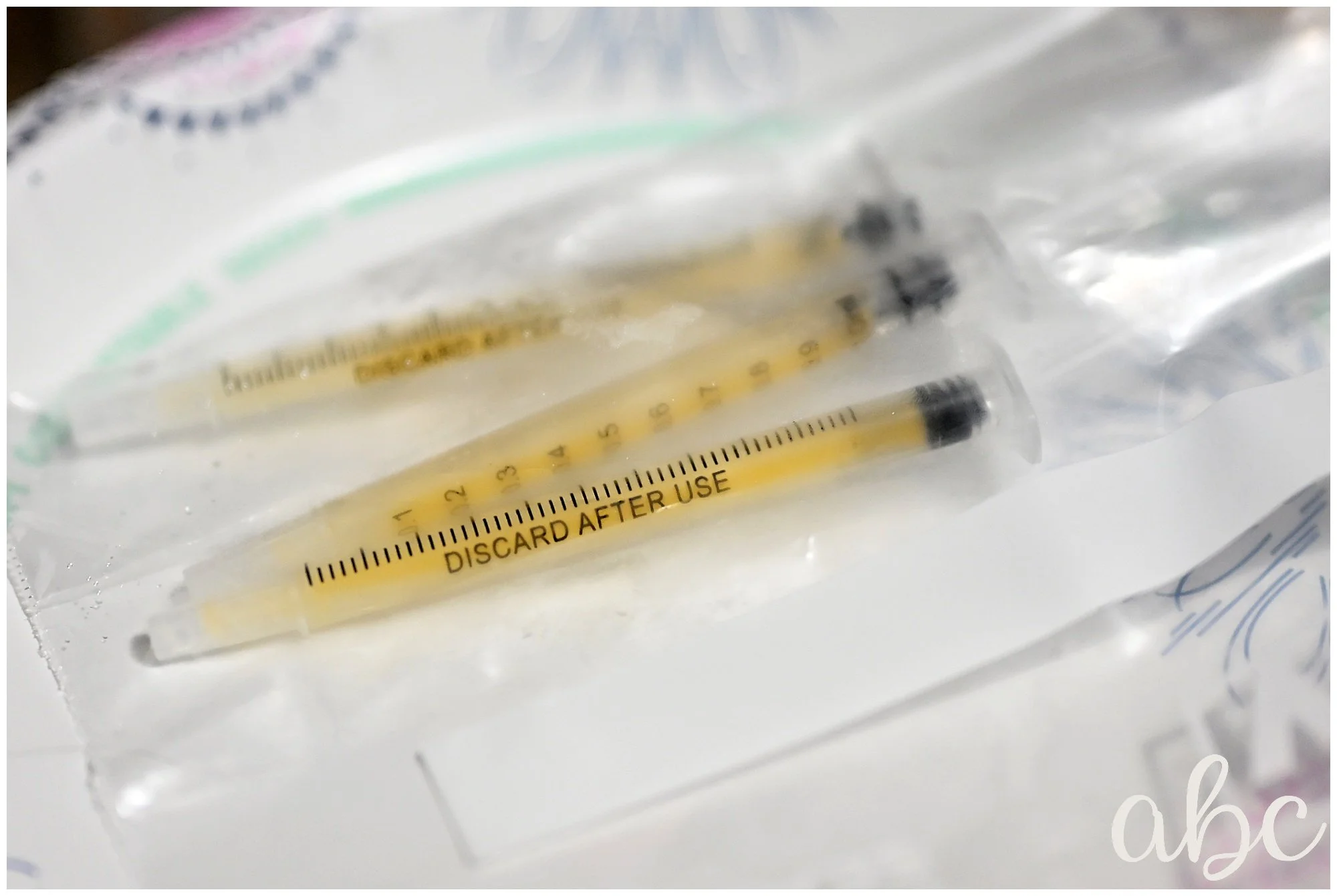
You can start collecting collostrum as early at 36 wks. Put in syringes, and store in the freezer.
Post Written By: Debbie Cornett, RN, IBCLC and Shea Collier, RN, IBCLC of Joyful Lactation
How to Collect and Store Colostrum Before Birth
Removing colostrum, the early breastmilk, is especially important during the first few days after birth, and in many cases, it can begin before delivery. With permission from your provider, starting around 37 weeks gestation, you could begin hand expression and collecting colostrum prior to having your baby. You can collect these drops in small, sterile oral syringes and freeze them. Collecting colostrum prior to delivery can help build your confidence with hand expression, and you can use this colostrum to supplement your baby within the first few days after delivery as needed.
Stored colostrum may be useful if your baby is born early, has difficulty nursing within the first few days, or needs extra support for certain medical concerns such as low blood sugar or phototherapy (the blue lights for jaundice). To easily transport your frozen colostrum syringes to your birth location, you can pack them in an ice-filled insulated tumbler or cup.
Please note: Not everyone is able to collect colostrum before birth, and that is completely normal. Colostrum is thick, and sometimes the body simply holds onto it until the placenta detaches. If you try to hand express and get nothing, it does not mean you have a low milk supply or that you will struggle to breastfeed.
There is one important caution: relying on saved colostrum instead of focusing on frequent milk removal after delivery may delay the development of a full milk supply.
Follow proper milk storage guidelines when collecting and storing colostrum. cdc.gov/breastfeeding/breast-milk-preparation-and-storage/handling-breastmilk.html

Canton, GA IBCLC Shea Collier showing new mom “reverse pressure softening”
Establishing Your Milk Supply in the First Few Days
Once your baby is born, frequent milk removal (meaning 8-12 times in 24 hours) is one of the most important ways to activate the hormones that help establish a full milk supply. Ideally, your baby latches soon after birth and nurses comfortably every 2-3 hours at the breast, but that may not always be the case.
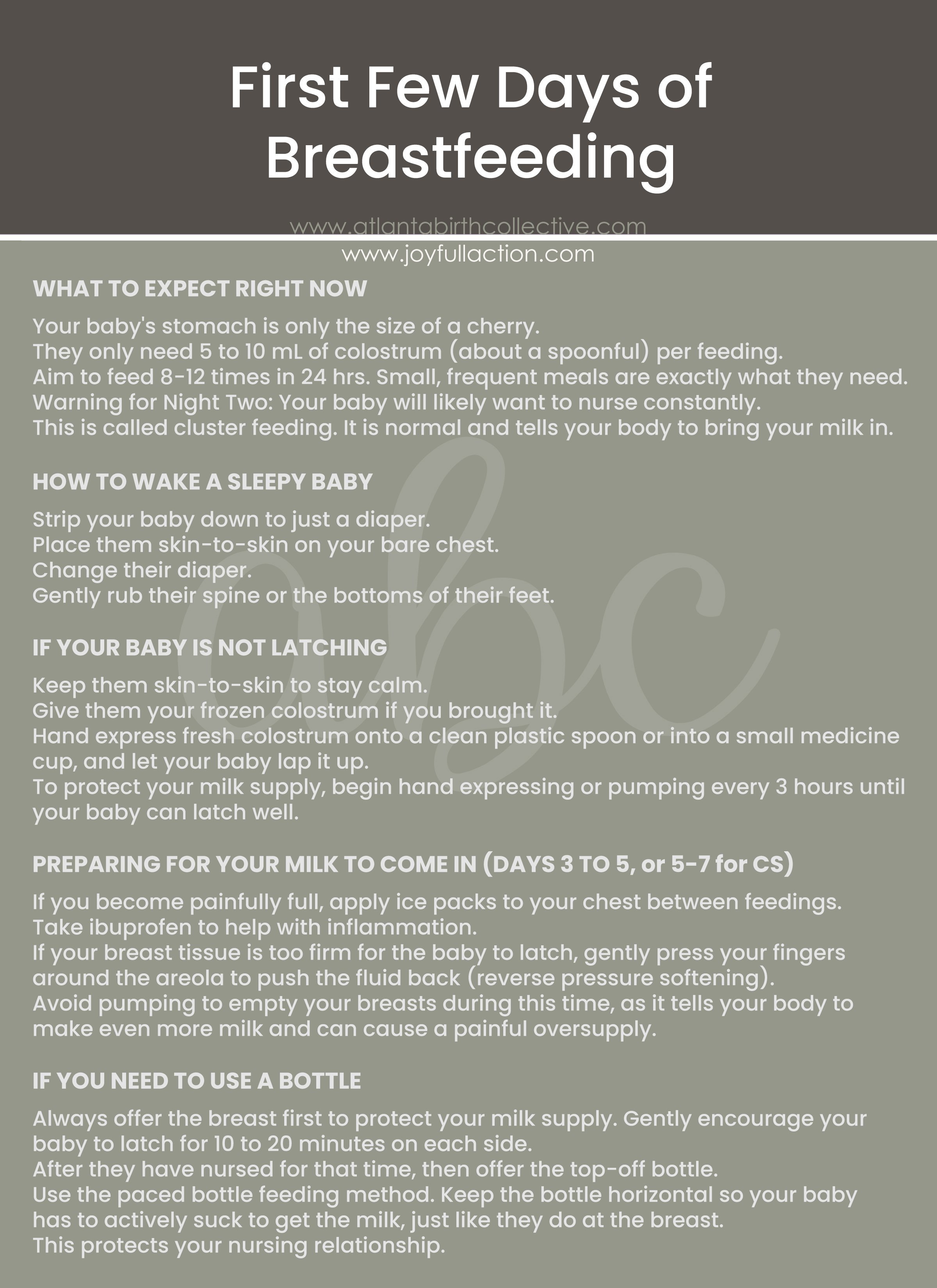
It is common for new moms to worry about their milk supply if they do not see a large volume of milk within the first couple of days. Because your baby’s stomach is about the size of a cherry at birth, nature designed colostrum to be in small amounts too. A typical feeding amount for the first 24-48 hours after birth is anywhere from 5-10mL, which is about a plastic spoonful.
Small, frequent feedings are normal and expected during the first few days. Keep in mind that on the second night of life, babies often realize they are no longer in the womb and may want to cluster feed, wanting to nurse almost continuously. This is normal behavior and helps bring your milk in. However, this extreme cluster feeding should not continue past the first few days. If your baby is still feeding constantly beyond those early days, please reach out to an IBCLC to ensure they are transferring milk effectively. Your milk should transition from colostrum to mature breastmilk somewhere around day 3-5 of life. Follow your baby’s feeding cues and offer the breast frequently!
How to Wake a Sleepy Baby for Breastfeeding
The first few days often do not go exactly as expected. Many babies are sleepy and may need to be woken up every 3 hours for feedings. Gentle encouragement can help your baby wake up for a feeding, such as changing their diaper, stripping them down to just a diaper, rubbing their spine and feet, and placing the baby skin-to-skin on your chest.
If your baby is still too sleepy to latch, you can hand express drops up to a spoonful of colostrum and supplement your baby that way. You can also cup-feed your baby with a medicine cup by placing the colostrum in the cup and having your baby lap it up.
What to do When Your Newborn Will Not Latch
If you are separated from your baby or your baby is not able to breastfeed effectively, the milk-making process needs to be stimulated as soon as possible. This is a perfect time to use the frozen colostrum you brought in your insulated cup.
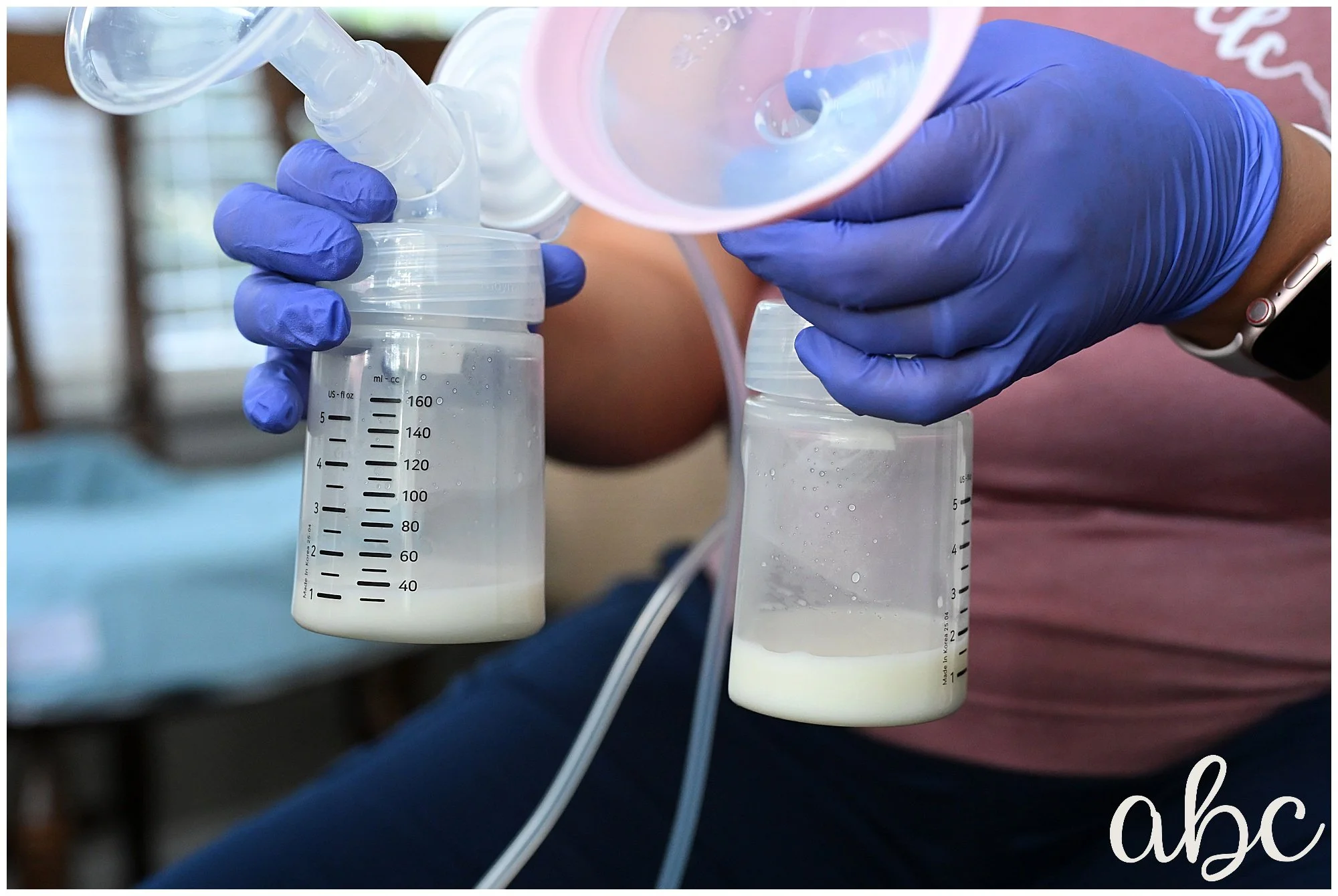
Frequent and effective hand expression or pumping should be started as soon as possible, which means removing milk every 3 hours! In the first few days, many moms find hand expression or using a manual/hand pump more effective than an electric pump. Support from a lactation consultant can help ensure milk removal is as effective as possible. At first, there may be little or no visible milk, but with continued stimulation, volume should increase rapidly over the next few days. If you begin pumping, please have your flange size appropriately measured and a full pump session should be done. This is very important for comfortable and effective pumping.
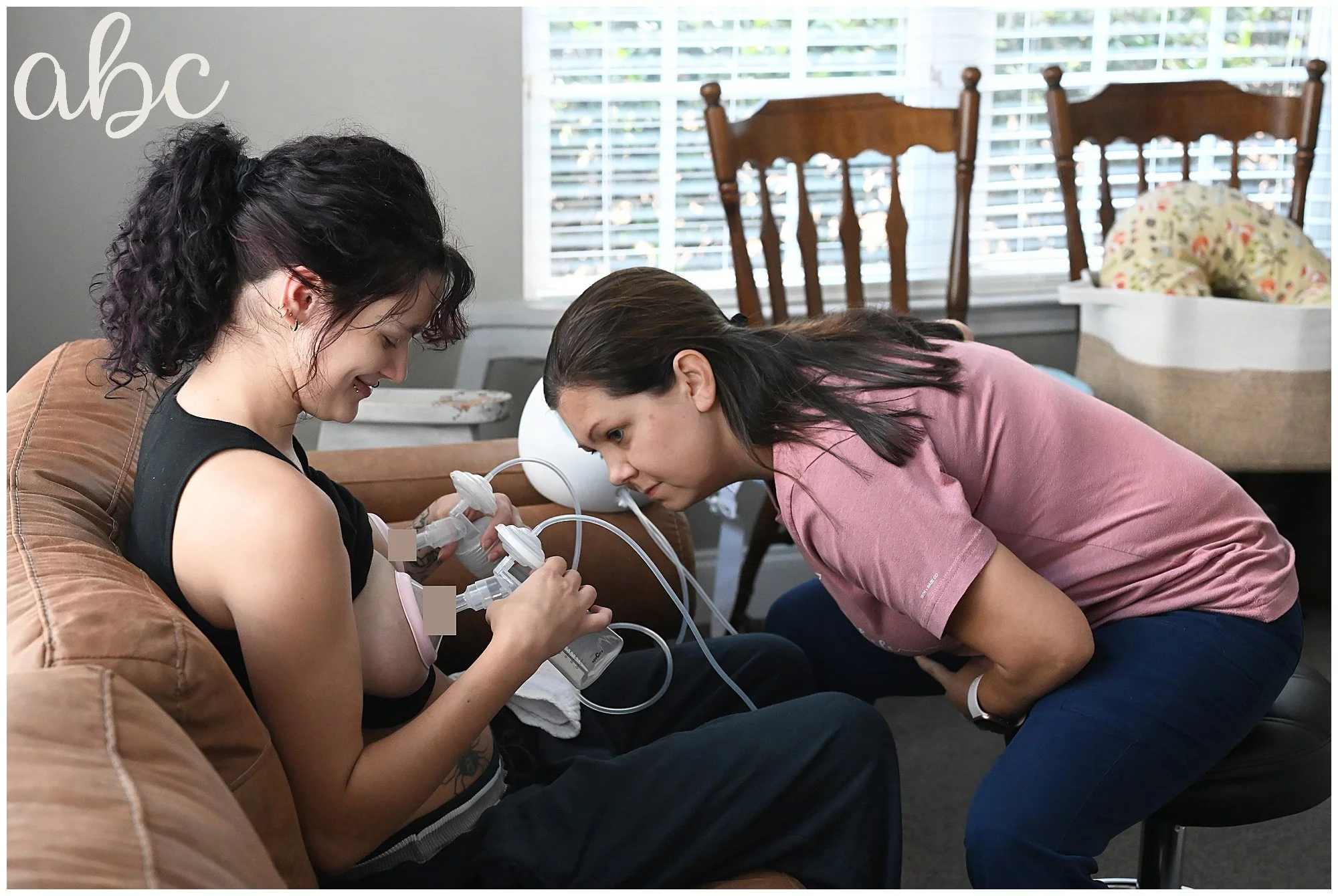
Did you know that pumps, parts and pieces are not all the same? Schedule an appt with an IBCLC who can measure you.
How to Manage Engorgement When Your Milk Comes In
The transition from feeling like there isn’t enough milk to feeling overly full often occurs when milk comes in, usually between days 3 and 5. This may happen sooner if you have been removing milk consistently or if you have breastfed before, and the feeling of breast fullness may be overwhelming.
Some quick tips to help reduce discomfort and inflammation are ice on your breasts in between feedings and anti-inflammatory over-the-counter medications like ibuprofen. If the breast tissue becomes too firm for the baby to latch, a technique called reverse pressure softening (pressing gently around the areola to move fluid back) can help soften the area for a better latch. Over the next few days and 1-2 weeks, the feeling of breast fullness will decrease.
If your baby is breastfeeding well, there isn’t a need to pump to remove milk, as this can stimulate an oversupply. Over the first 1-2 weeks after delivery, your baby should be able to regulate your milk supply. Your focus as a new mom should be on effective feeding and comfort measures for your breasts unless additional milk removal is medically needed.
Supplementing With Formula While Breastfeeding
While there are times when supplementation is medically necessary, or chosen for maternal well-being, it is helpful to know how formula affects early milk production. If you need to use formula to top your baby off in the first few days, it is important to always bring your baby to the breast first. Aim to gently encourage your baby to latch for 10 to 20 minutes on each side to ensure your body gets the stimulation it needs, and then offer the formula top-off.
If formula is given before a nursing session, babies will begin looking for the easy flow and immediate gratification from the bottle. This may mean that your baby will get frustrated more easily at the breast and there may not be enough stimulation to encourage milk production.
When introducing bottles to your newborn baby, we recommend always using a paced bottle feeding method. This is to encourage your baby to work at the bottle just as they have to at the breast, and to protect your early breastfeeding relationship.
When to Contact a Lactation Consultant
Women have been breastfeeding successfully for thousands of years. As lactation consultants, birth workers, and really a society, we should encourage new moms to trust their body and the process. If you are unsure, struggling with latching or nipple pain, think you have a low milk supply, or you have been told you need to supplement, please reach out to an IBCLC (lactation consultant) near you. Milk removal in those early days is a very important part of the process to ensure a full milk supply!